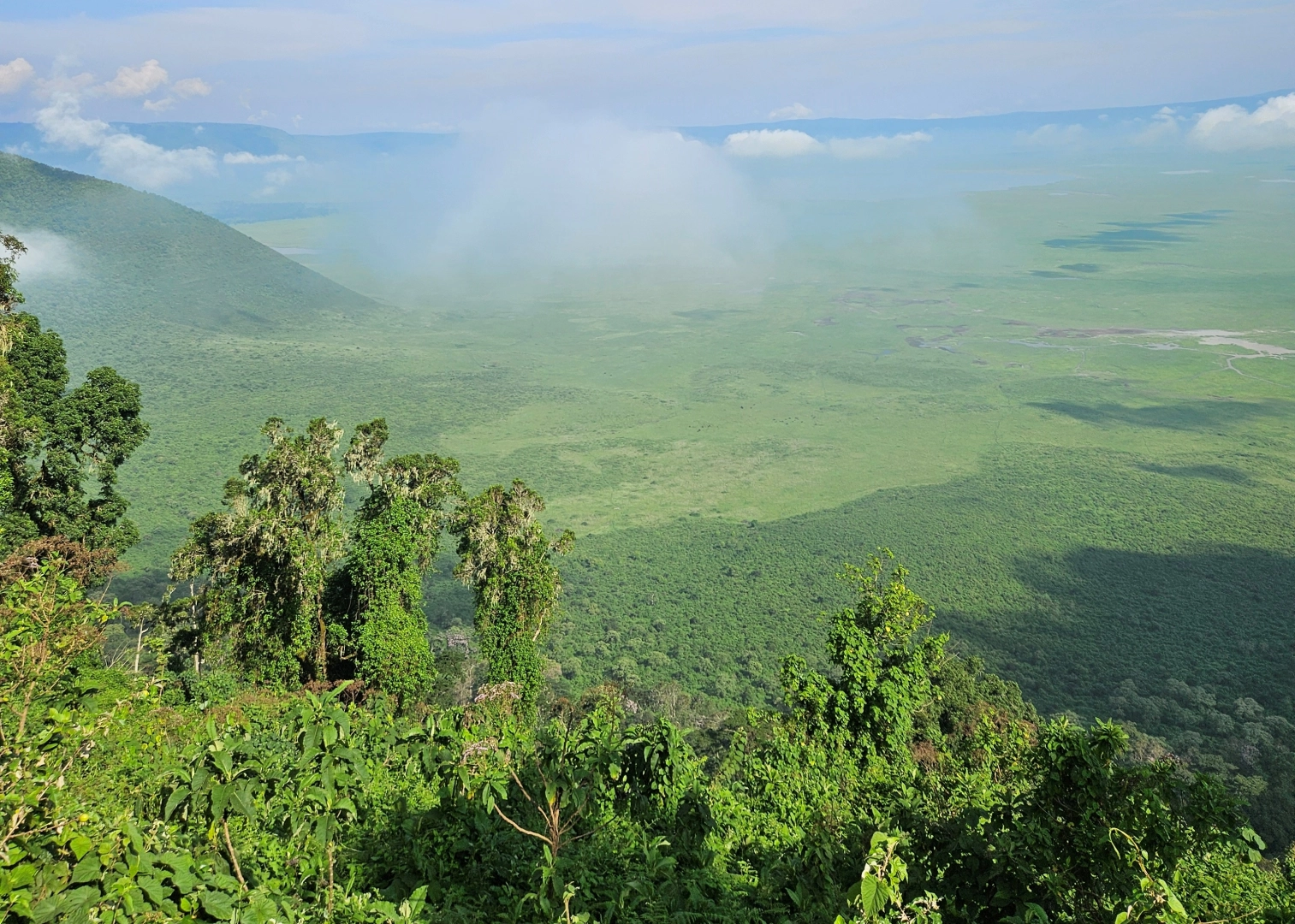
The Ngorongoro Crater, a UNESCO World Heritage Site, is one of the most spectacular and well-known travel destinations in Africa. The crater is the result of a collapsed volcano and now forms a natural, enclosed oasis for an amazing variety of wildlife. With a diameter of about 19 kilometers and an area of over 260 km², it is the largest intact crater in the world and a highlight of the northern safari circuit in Tanzania.
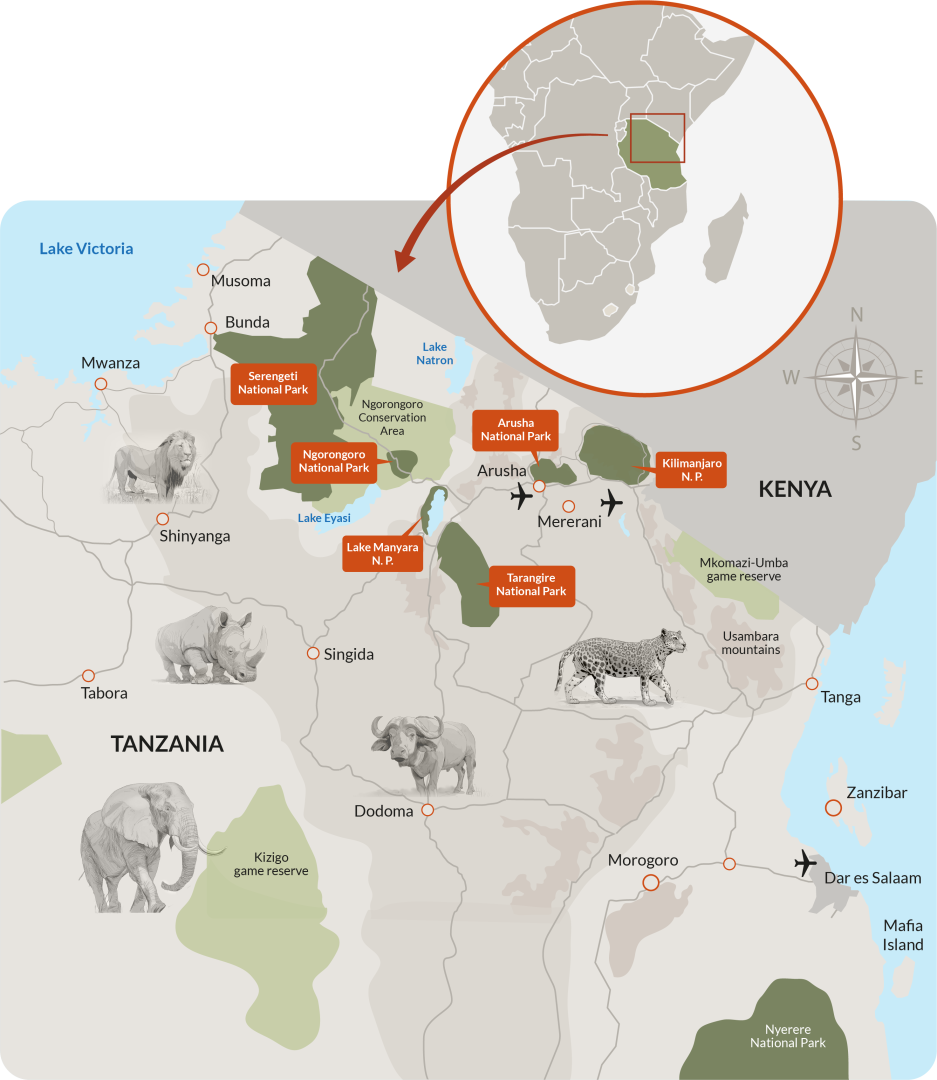
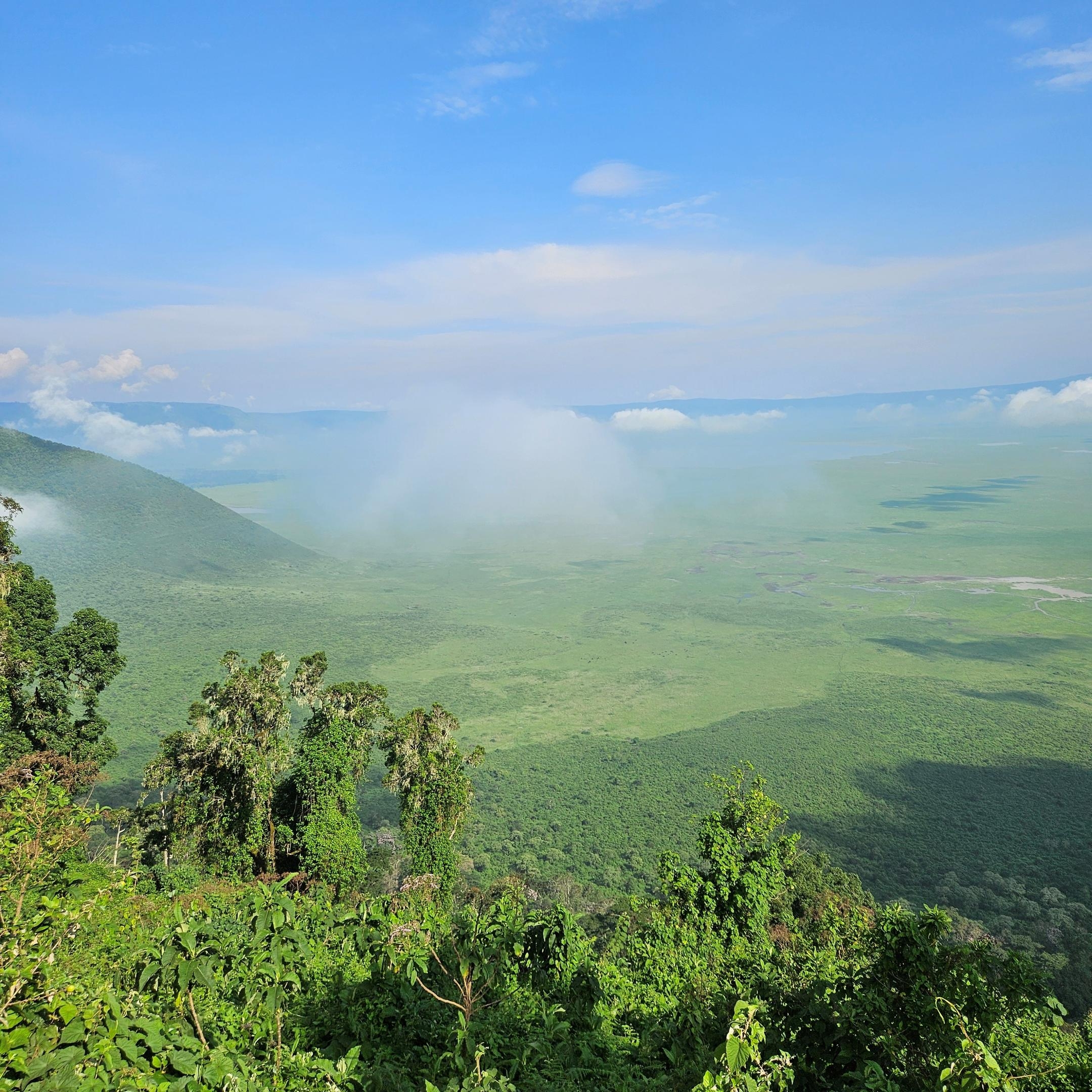
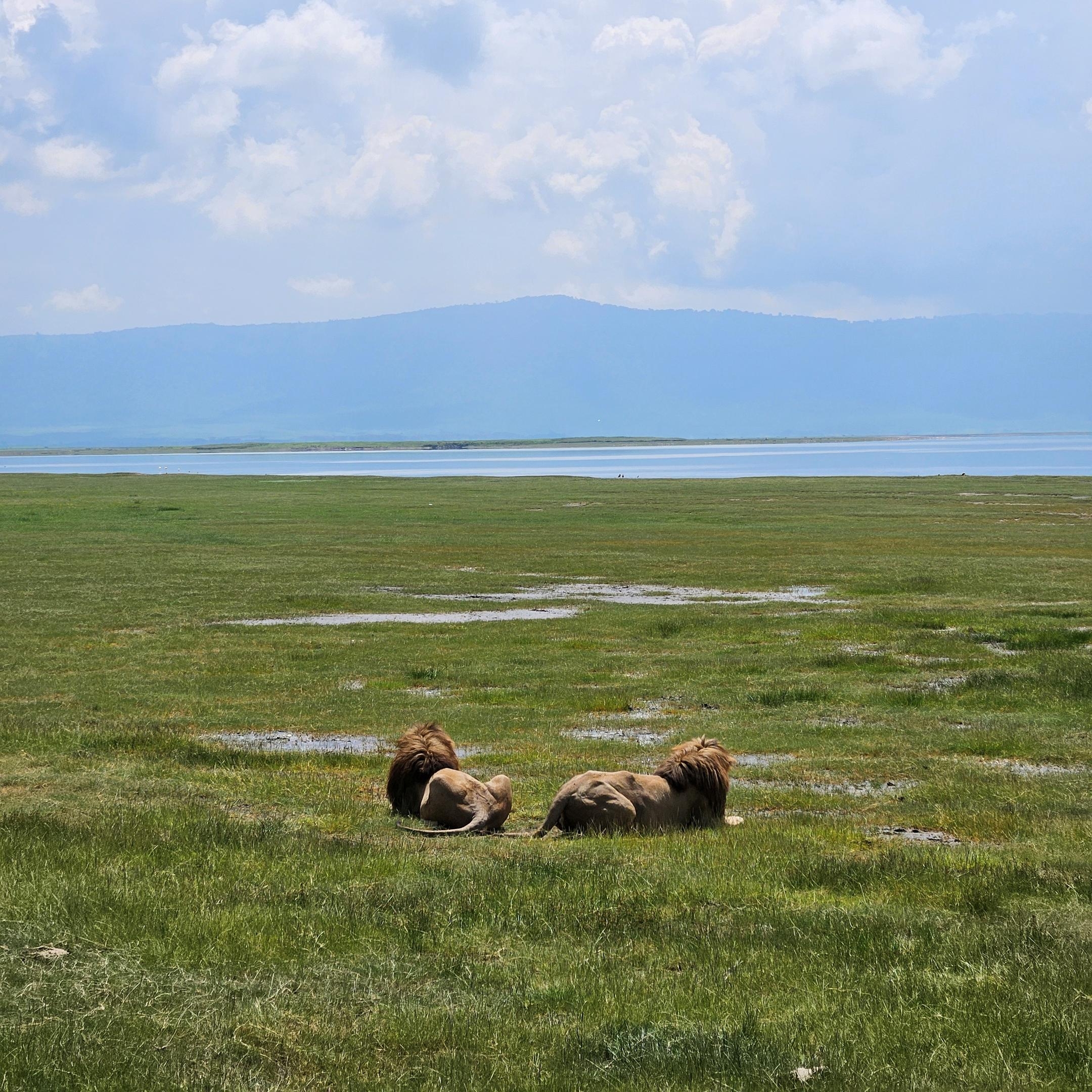
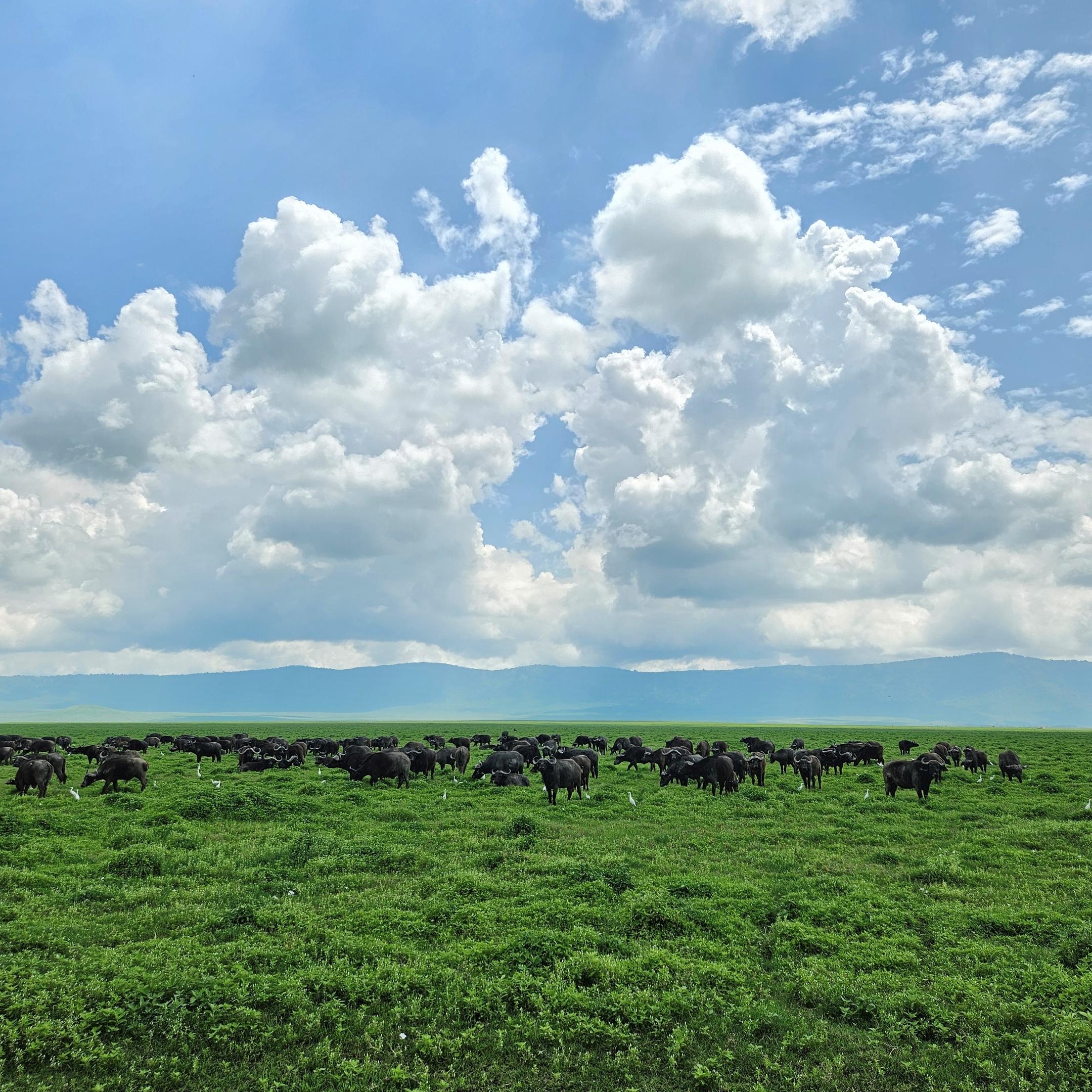
The Ngorongoro Crater impresses with its diverse ecosystems, creating a unique backdrop in a small space.
The crater floor consists of open grasslands, acacia forests,
swamps, and a central salt lake, Lake Magadi. This diversity
makes it a habitat for numerous
species of animals.
This shallow alkaline lake in the center of the crater
attracts flamingos and other waterfowl, making it a particularly
photogenic part of the crater.
The wooded slopes of the
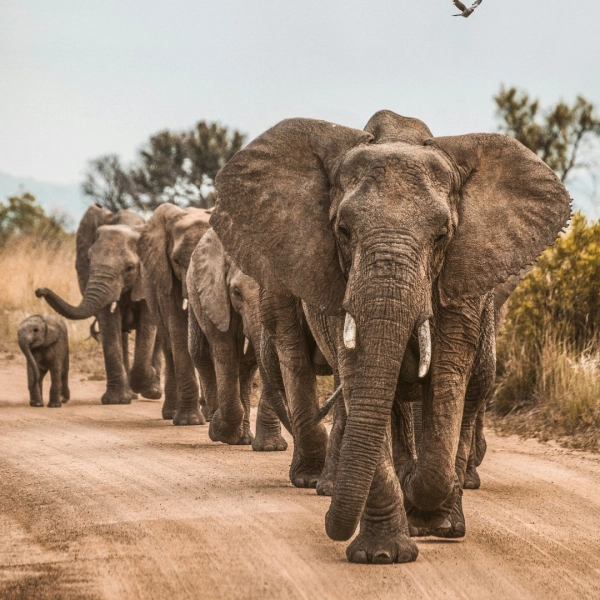
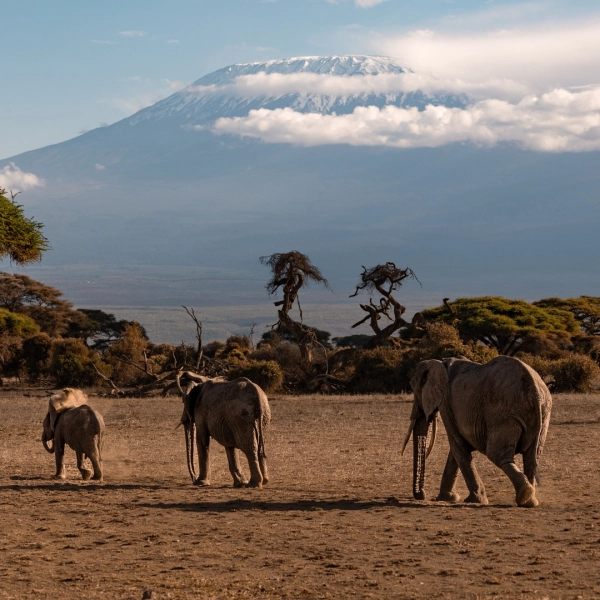
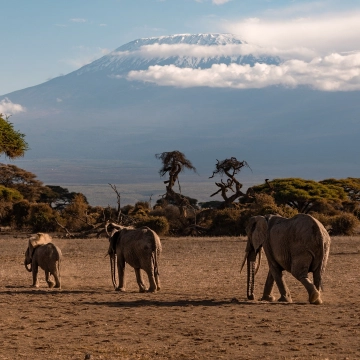
crater are a habitat for elephants and numerous bird species.
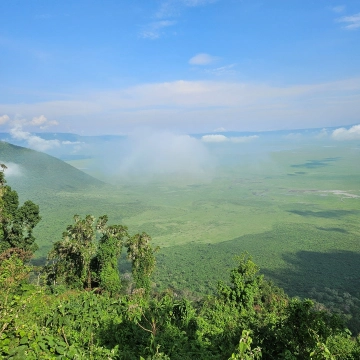
The crater rim is about 600 meters above the floor and offers
breathtaking panoramic views of the landscape below.
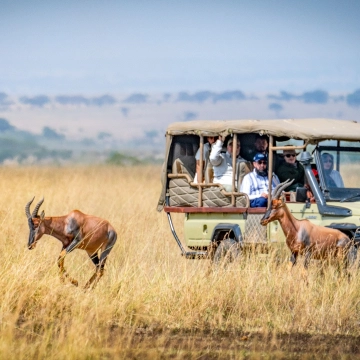
The Ngorongoro Crater is often referred to as the "Garden of Eden" due to hosting one of the highest concentrations of wildlife in Africa. Visitors can experience some of Africa's most famous animals in their natural environment here.
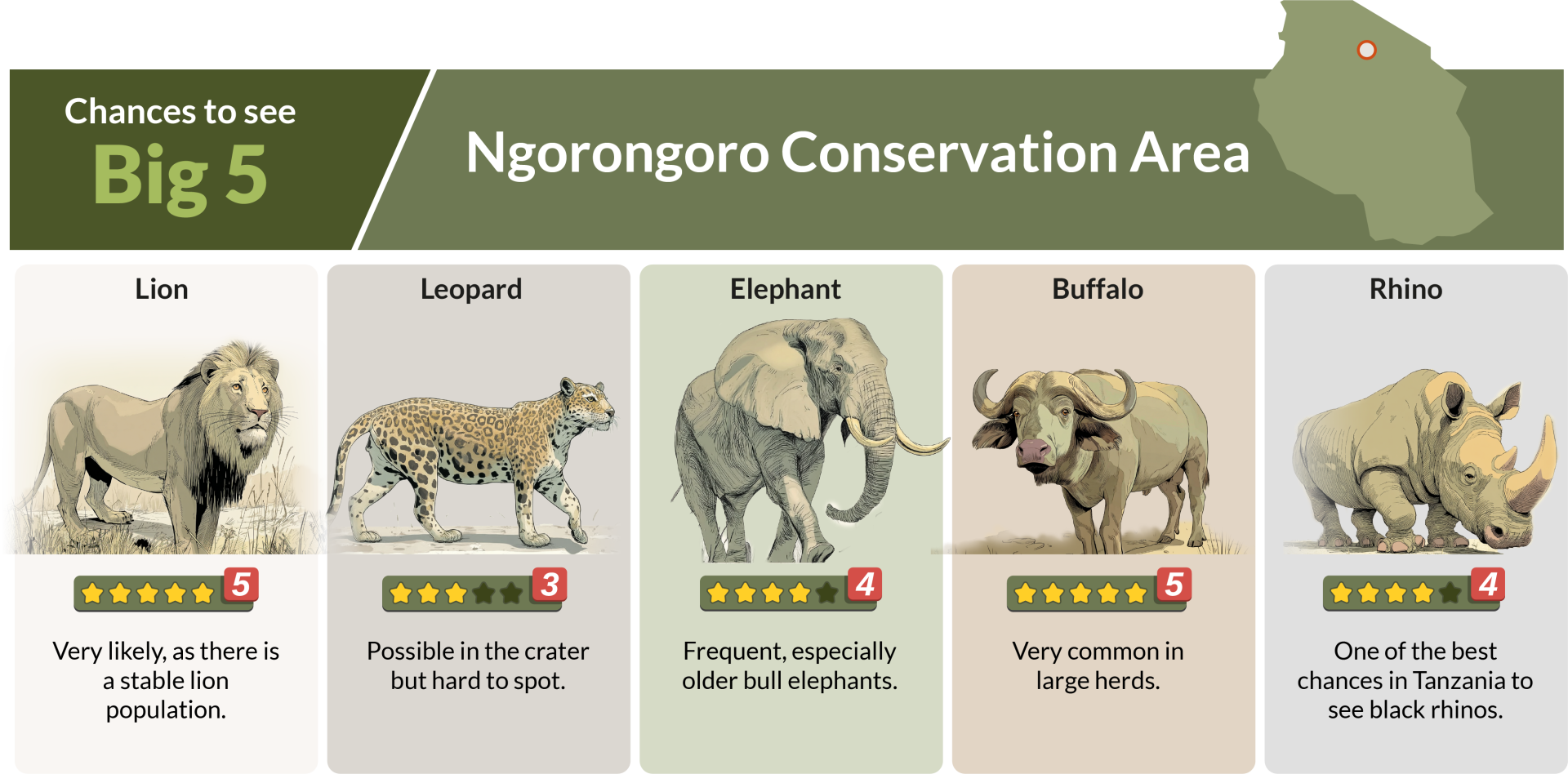
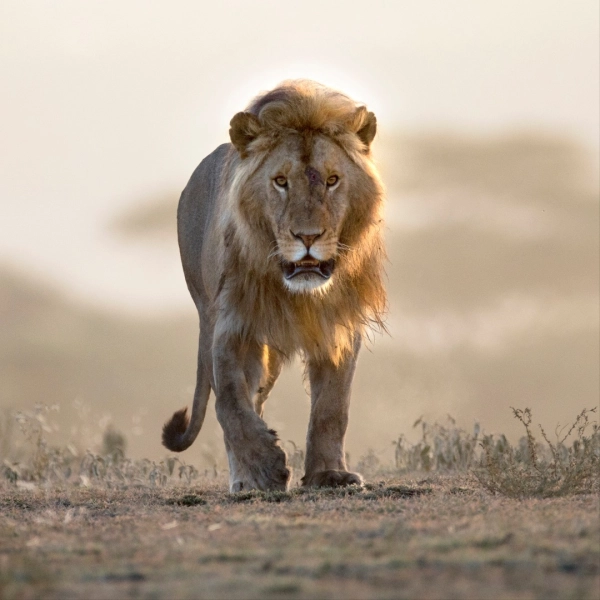
The crater is one of the few places where you can see all the Big Five –
lion, leopard, elephant, buffalo, and rhinoceros – on a single safari. Particularly noteworthy are the endangered
black rhinos, which have found a protected refuge here.
The dense populations of lions, hyenas, and
occasionally cheetahs make the crater a hotspot for
predator sightings.
Large herds roam the
open grasslands, providing food for the predators.
The Magadi Lake and the surrounding wetlands are a
paradise for birdwatchers, especially during the rainy season when
flamingos appear in large flocks.
The crater is known for its ancient, majestic bull elephants, easily recognizable by their large tusks.
The Ngorongoro Crater is one of the best areas in Africa to see an
exceptional variety of wildlife in a
small space.
The critically endangered
rhinos find a protected habitat in the crater, and the chance to see them
here is higher than in many other regions.
Tanzania
offers unforgettable safari experiences throughout the year. Depending on
the season, landscapes, climate, and wildlife viewing opportunities vary.
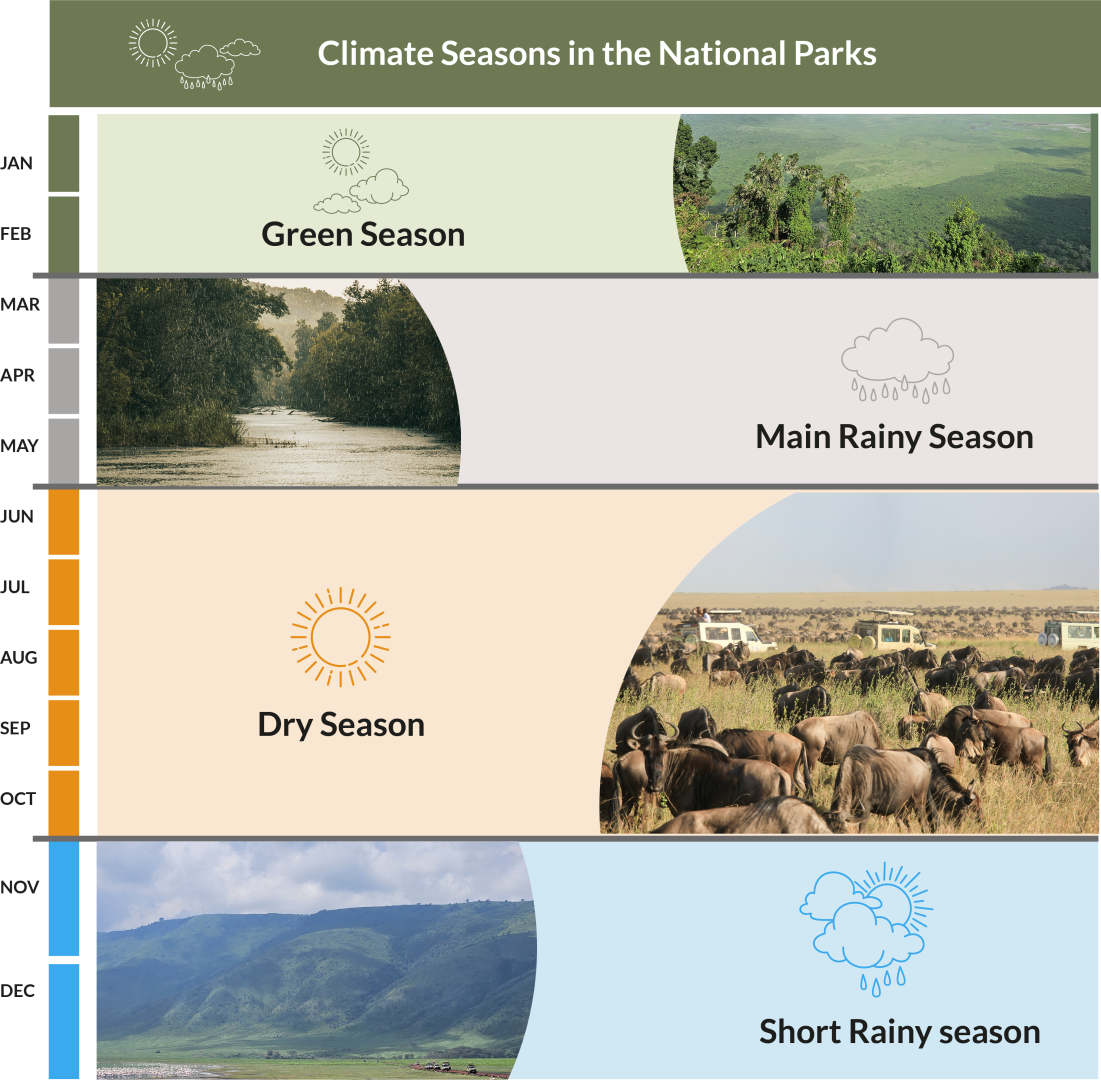
The dry season is considered the optimal time to visit:
Weather: Sunny days, pleasant temperatures between 20 and 30 °C. Cooler nights in higher regions like the Serengeti drop to 10 to 15 °C.
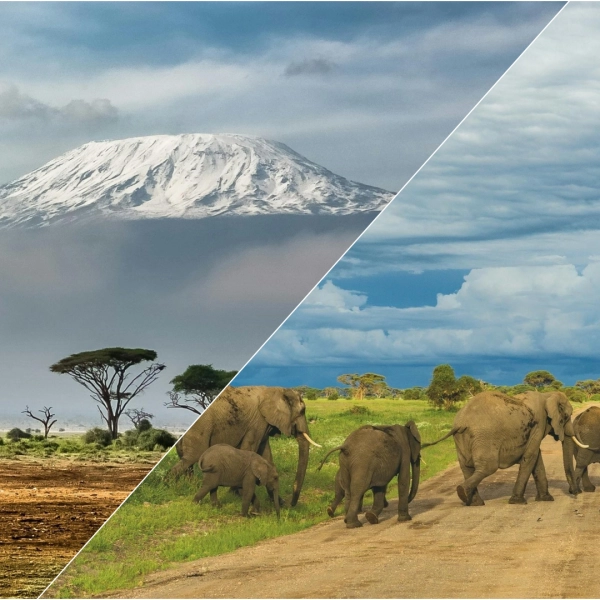
Highlights: Witness the spectacular "Great Migration" – huge herds of wildebeest and zebra migrate through the Serengeti. The Tarangire National Park and the Ngorongoro Crater also impress with high animal densities.
The green season delights nature lovers and photographers:
Weather: Warm and pleasant, 25 to 32 °C during the day. Rainfall is usually short and intense.
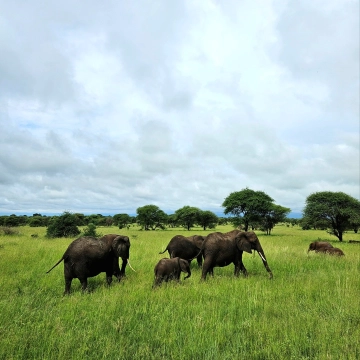
Highlights: The landscape is lush green. Perfect for
birdwatchers as many migratory birds are present. You can also
experience young animals in their natural habitat.
Despite heavier rainfall, Tanzania remains impressive:
Weather: Rainy, but the landscape flourishes.
Highlights: Particularly picturesque with high animal concentrations at
water sources. Popular areas like the Serengeti National Park remain
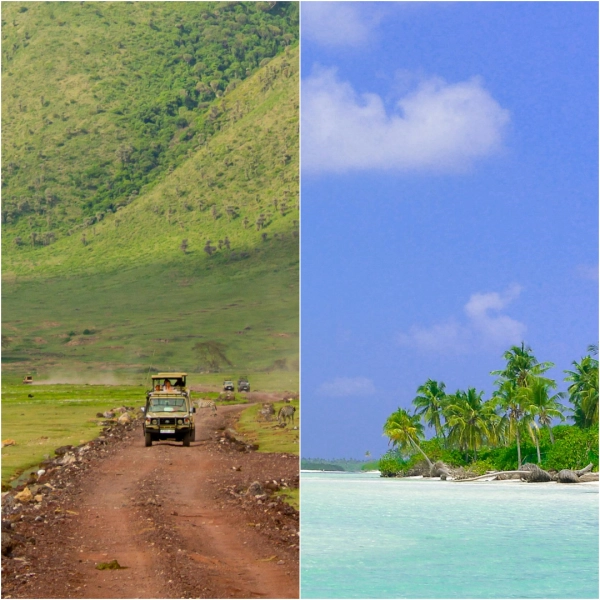
accessible. Some roads and paths may be challenging to navigate, adding
a sense of adventure to the journey.
The short rainy season combines the benefits of the dry season with fresh vegetation:
Weather: Pleasantly warm, temperatures between 25 and 30 °C. The
rain showers are usually brief, often in the afternoon or evening, and
hardly interrupt safaris.
Highlights: Nature comes alive
again, becoming greener, and the wildlife remains highly visible. Less
dust and fewer visitors make these months particularly attractive for
travelers who prefer a quieter experience. Ideal for photographers
capturing dramatic cloud formations and vibrant colors.
Whether you prefer the exciting wildlife migration in the dry season or the blooming nature in the rainy season – Tanzania is a paradise year-round. We tailor your trip individually to ensure you have an unforgettable adventure.