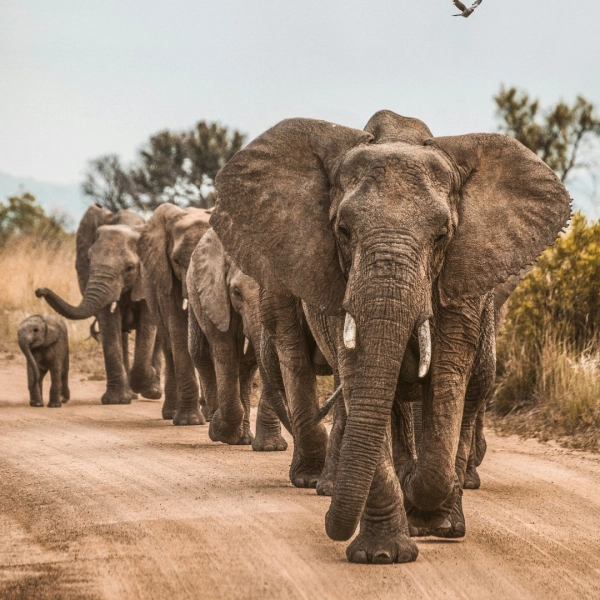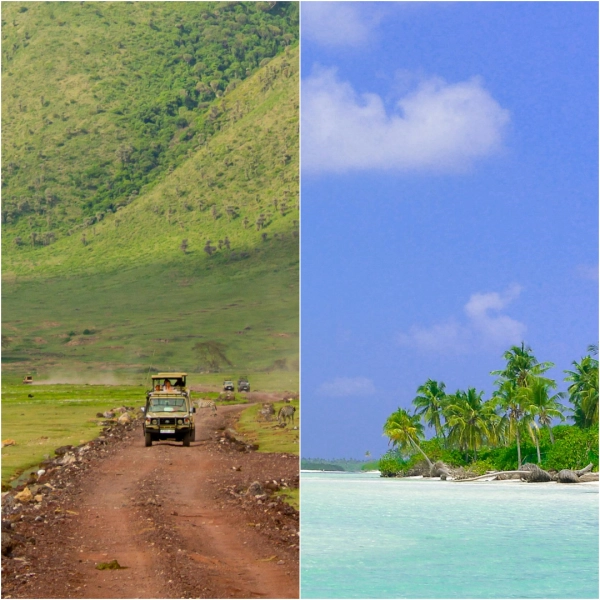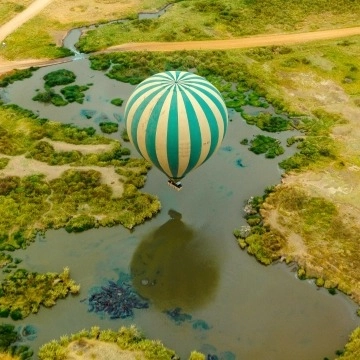
Every year, the Serengeti becomes the stage for one of the most extraordinary wildlife events on Earth: the Great Migration. Over 1.5 million wildebeest, accompanied by hundreds of thousands of zebras and gazelles, move in a continuous cycle across northern Tanzania and into Kenya’s Maasai Mara, driven by rain, fresh grass, and survival.
This is not a single moment in time, but a year-round journey and every phase offers a different, unforgettable safari experience.
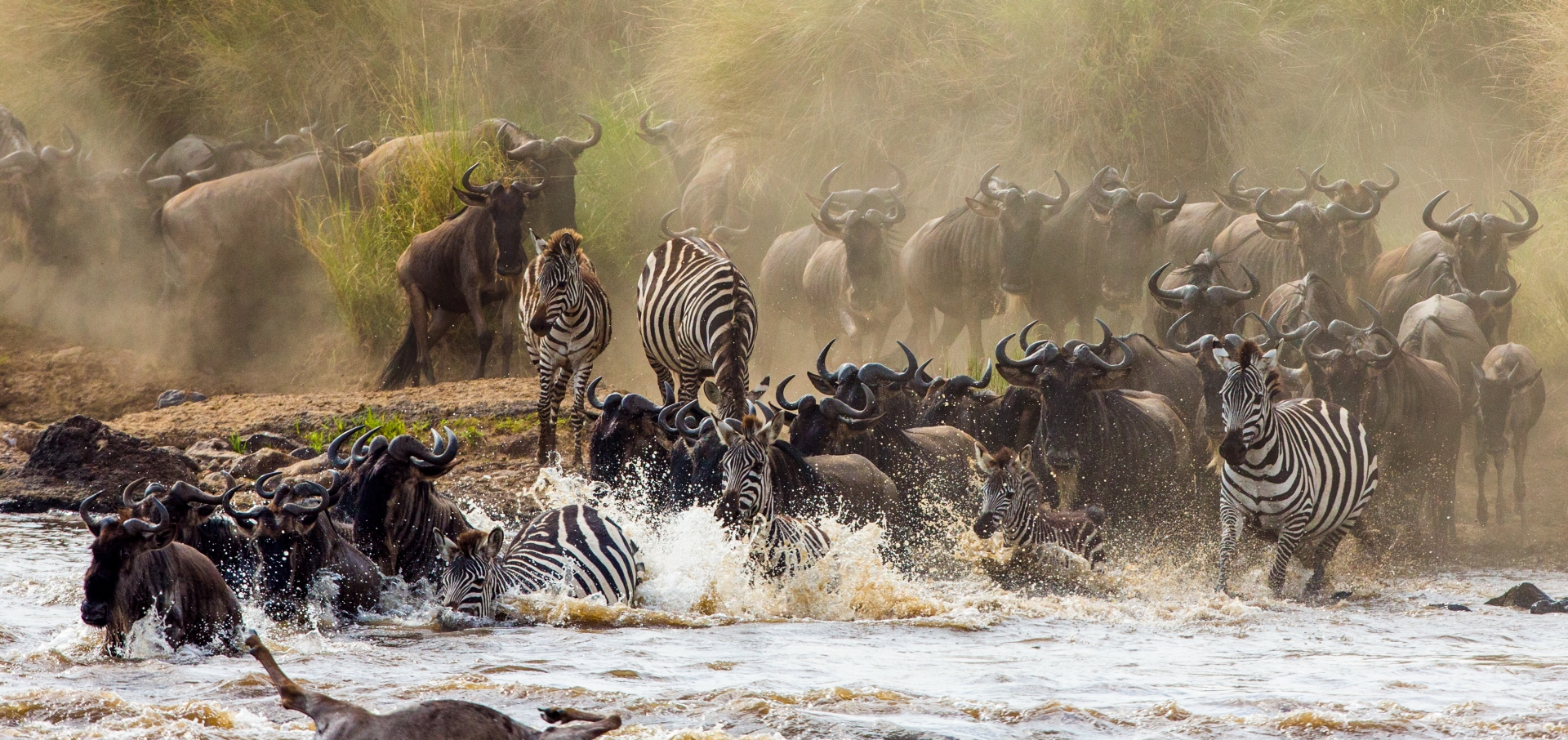
The Great Migration is the largest land migration of mammals on the planet. It follows a natural rhythm shaped by seasonal rains, creating a circular route through the Serengeti ecosystem.
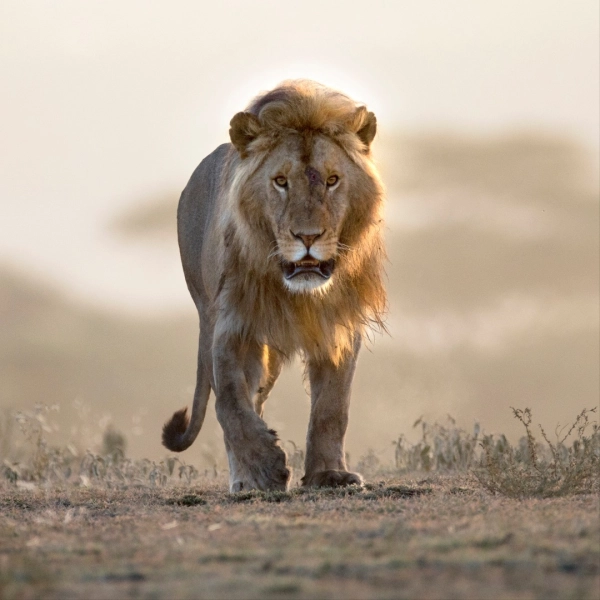
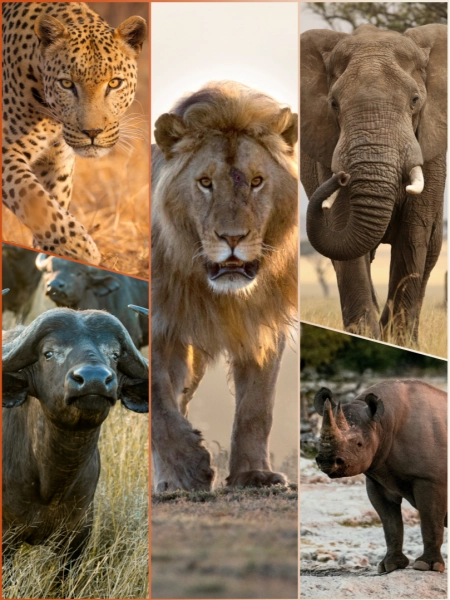
Predators such as lions, cheetahs, leopards, crocodiles, and hyenas follow closely, making this journey a dramatic story of life, death, and renewal.
Highlights:
The migration begins the year in the southern Serengeti and Ndutu region, where short grasses provide vital nutrients for newborn calves. This is the calving season, a magical time when new life fills the plains.
Predators are never far away, making this one of the best times for photographers and wildlife enthusiasts.
Best for: Calving, predator sightings, photography
Highlights:
As the rains shift, the herds begin their slow journey northward into the central Serengeti. This is a transitional period where you can witness the sheer scale of the migration as animals move in endless lines across the savannah.
Highlights:
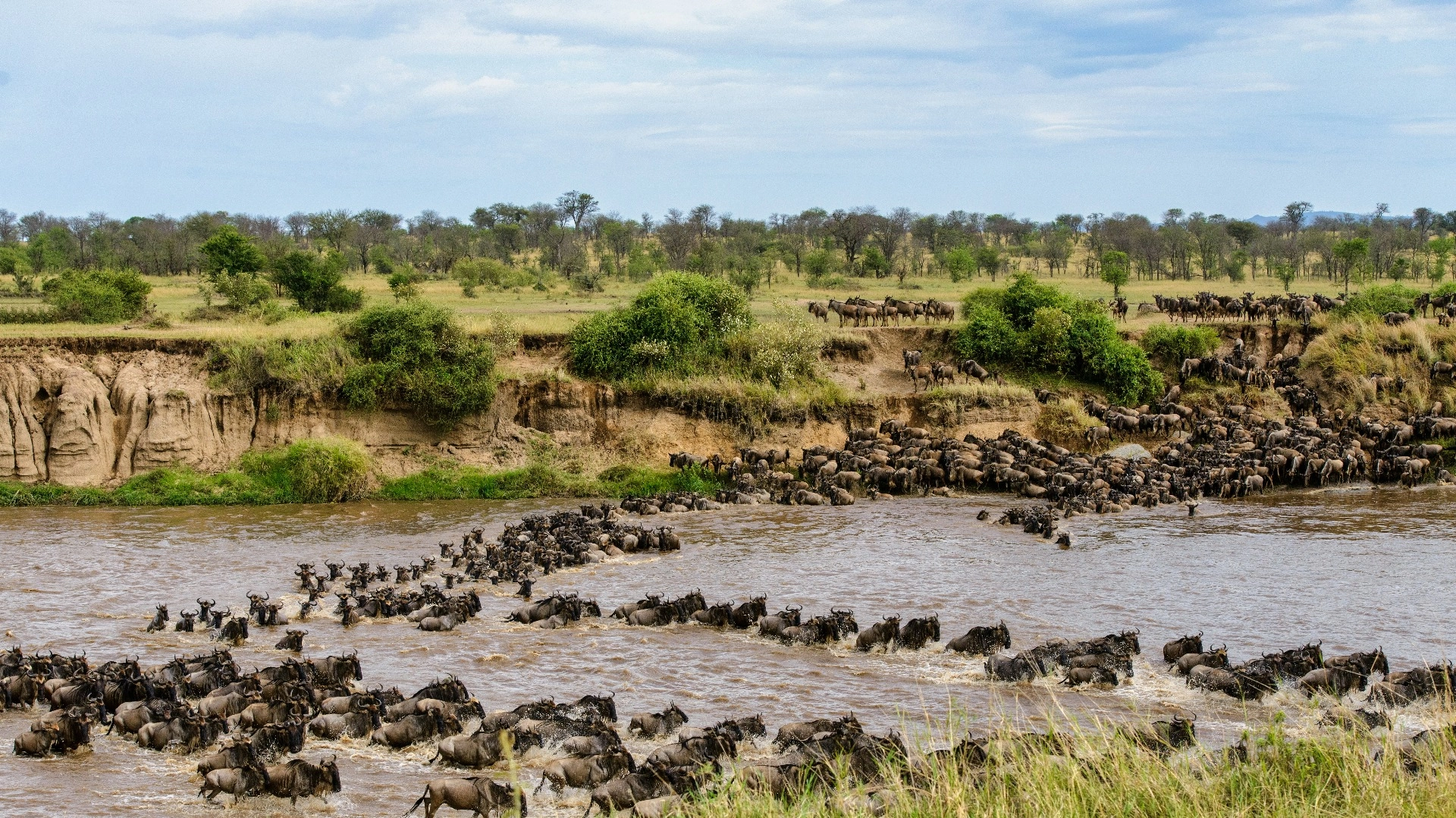
By late May and June, the migration reaches the western Serengeti, where the Grumeti River poses the first major obstacle. These crossings are intense and unpredictable, offering thrilling safari moments.
Highlights:
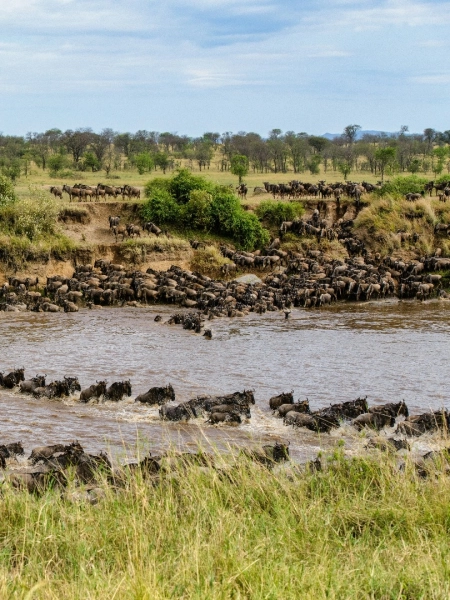
This is the most famous phase of the Great Migration. The herds arrive in the northern Serengeti, facing the formidable Mara River. Thousands of animals gather, hesitate, and finally plunge into crocodile-infested waters.
River crossings can happen multiple times a day — or not at all — making patience and expert guiding essential.
Best for: Iconic migration scenes, adventure, bucket-list safaris
Highlights:
After grazing in the north, the herds begin moving south again as short rains fall in the Serengeti. This is a calmer phase, perfect for travelers seeking fewer vehicles and peaceful game drives.
By December, the herds complete the circle, returning to the southern Serengeti, ready to begin the cycle once again — and prepare for the next calving season.